

Insert molding — also called insert overmolding or metal-to-plastic molding — fuses discrete components (inserts) into molded plastic in a single automated cycle. It’s a powerful approach for producing robust, assembly-free parts that combine the strength of machined inserts or stamped metals with the geometry and sealing of molded polymers. At Thesun Industry we run insert molding from prototype through high-volume production as part of our one-stop service, supporting OEM customers with tooling, secondary operations, and full supply-chain integration.
What Is Insert Molding?
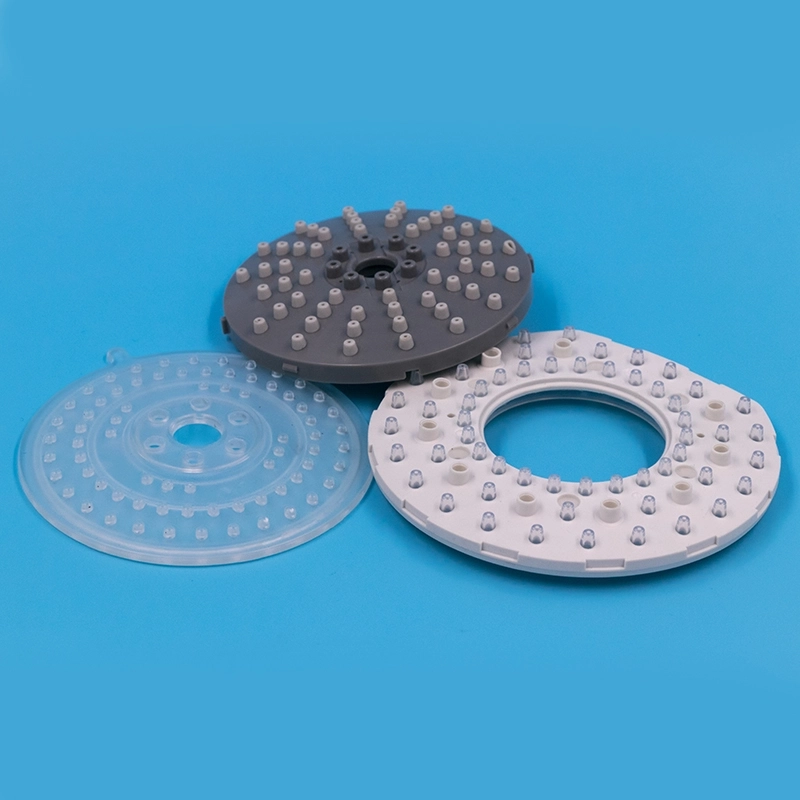
Insert molding is a manufacturing process in which preformed components — metal bushings, threaded brass inserts, wire terminals, electronic subassemblies, or glass/plastic inserts — are placed into a mold and then encapsulated by injected thermoplastic or thermoset material. The insert becomes a permanent part of the final component, eliminating separate fasteners and secondary assembly.
When Should You Use Insert Molding?
Use insert molding when you need:
- Strong mechanical fastening with embedded threads or bearings.
- Hermetic or sealed assemblies with integrated ports or connectors.
- Reduced part count and faster assembly lines.
- Improved reliability and tamper resistance.
Typical programs include sealed sensor housings, threaded bosses in consumer appliances, and hybrid metal-plastic fittings in automotive systems.
Insert Molding Process
Step 1: Insert placement in the mold
Inserts are loaded manually or by automation (robotic feeders) into precise pockets in the mold cavity. Proper fixturing and tolerances are critical to assure consistent placement.
Step 2: Mold closing and cavity sealing
The mold closes and the cavity is sealed around the insert. Strategic vents prevent trapped air and ensure complete fill.
Step 3: Plastic injection and encapsulation
Molten polymer is injected at the prescribed temperature and pressure. The plastic flows around the insert, forming mechanical interlocks and a bond to the insert surface.
Step 4: Cooling and solidification
Controlled cooling solidifies the polymer. Cooling time depends on wall thickness, polymer thermal conductivity, and tool cooling channels.
Step 5: Mold opening and part ejection
The mold opens and the finished insert-molded part is ejected, often with minimal flash and ready for downstream processes.
Step 6: Inspection and quality verification
Parts undergo dimensional checks, pull-out testing for insert retention, visual inspection, and any electrical or pressure testing required by the application.
Insert Molding Considerations
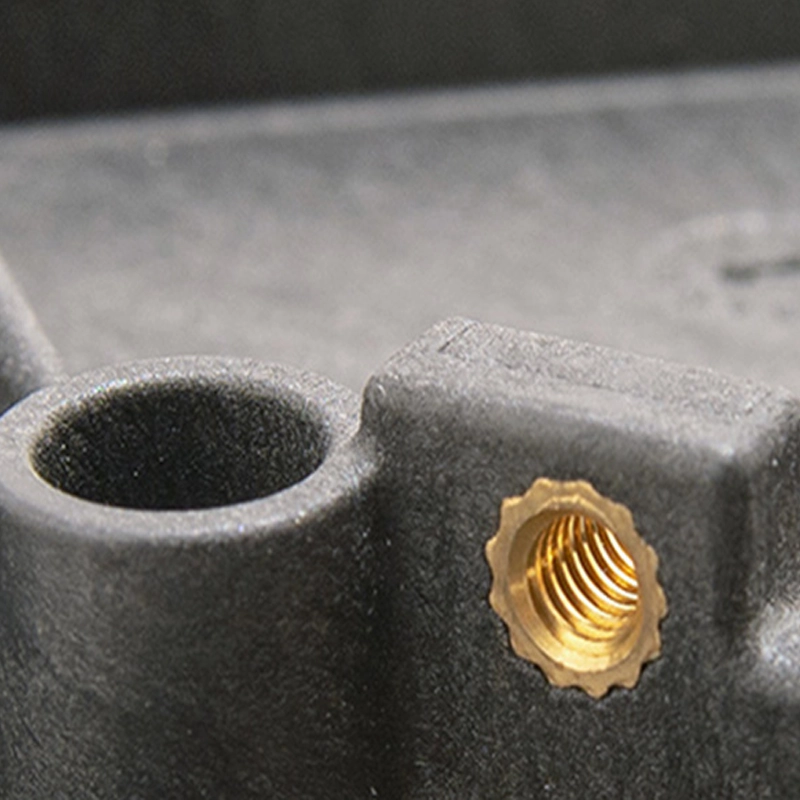
- Insert material and surface finish — roughened or knurled features, plating, or chemical pretreatment improve adhesion.
- Thermal compatibility — ensure inserts tolerate injection temperatures and cycles.
- Insert geometry — include undercuts, grooves, or expansion features to form mechanical locks.
- Placement tolerance — use tight fixturing and vision-guided robots for high-cavity molds.
- Cycle time optimization — balance cooling time versus material crystallinity to prevent stress cracks.
Common Insert Types Used in Insert Molding
- Threaded brass or stainless steel inserts for repeatable fastening.
- Sintered metal filter elements or screens.
- Bearing bushings and metal sleeves.
- Electronic modules or connectors that require encapsulation.
- Decorative metal badges and nameplates.
Common Insert Materials Used in Insert Molding
- Metals: brass, stainless steel, aluminum, steel, plated components.
- Ceramics: dielectric substrates and insulating components.
- Plastics: pre-molded components that must be overmolded for sealing or aesthetics.
Insert Molding Design Guidelines (Critical for Success)
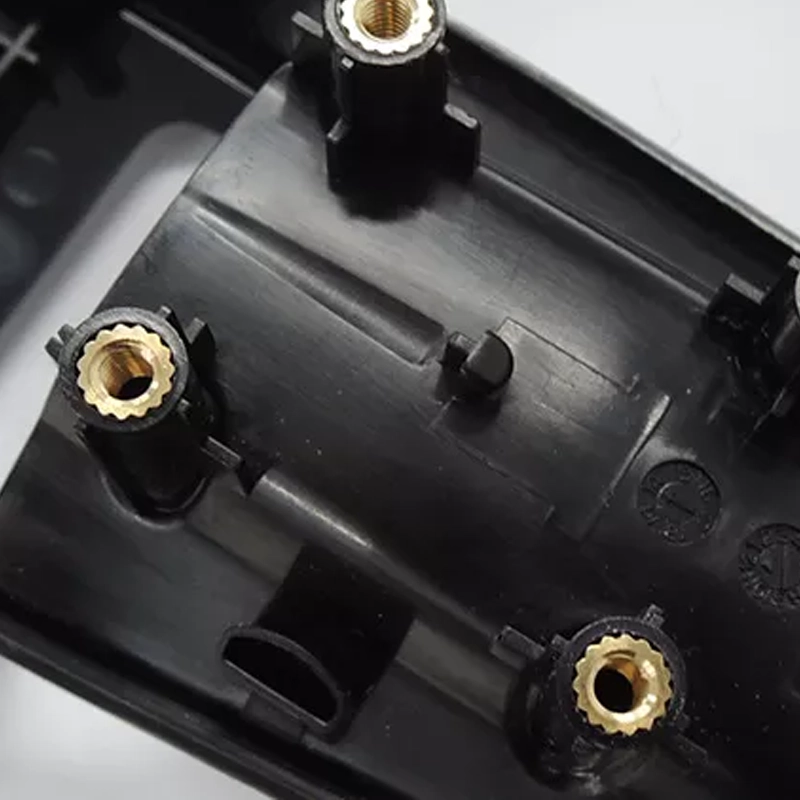
- Design inserts with retention features like flanges, knurls, or undercuts.
- Provide adequate plastic wall thickness around inserts to avoid sinks and voids.
- Avoid placing inserts in areas of high stress concentration unless supported by ribs.
- Specify draft angles and radii to facilitate molding and ejection.
- Choose polymers with appropriate glass transition or melting temperatures to minimize thermal mismatch.
- Run a mold-flow simulation to confirm fill, weld lines, and venting needs.
Advantages of Insert Molding
- Reduces part count and assembly labor.
- Increases joint strength and service life by embedding robust mating features.
- Improves sealing and environmental protection by eliminating mechanical fasteners.
- Enables compact, integrated designs not feasible with secondary assembly.
- Enhances aesthetics by hiding functional hardware under a molded layer.
Insert Molding vs Overmolding
Insert molding and overmolding are related but distinct:
- Insert molding permanently incorporates a discrete, often functional insert into the part.
- Overmolding typically adds a second polymer layer over a substrate, such as overmolding soft TPE onto a rigid plastic to improve grip or sealing.
Both approaches reduce assembly steps, but insert molding is the preferred choice when metal strength, threaded hardware, or embedded electronics are required.
Typical Applications of Insert Molding
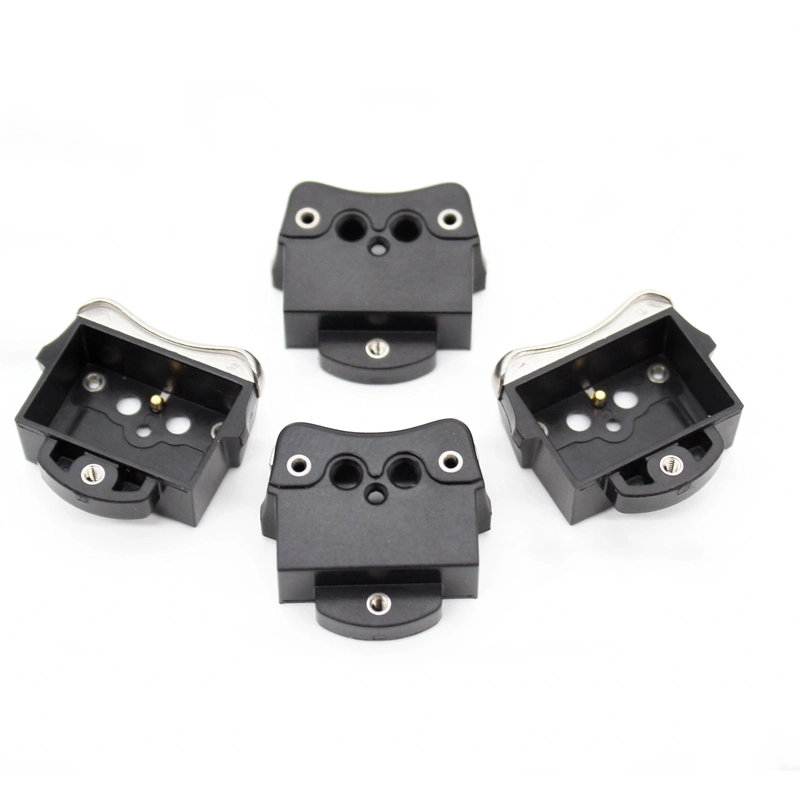
- Automotive sensor housings, threaded engine components, and switches.
- Consumer electronics with embedded connectors or metal buttons.
- Medical devices with sealed ports and integrated metal features.
- Industrial machinery with press-fit bushings and grease channels.
- Appliance controls and plumbing components requiring embedded brass threads.
Conclusion
Insert molding is a versatile production method for merging the best properties of materials into a single manufacturable component. When engineered correctly, it reduces assembly costs, increases reliability, and opens up product designs that are lightweight and compact. As an experienced manufacturer and factory, Thesun Industry provides complete insert molding solutions — from DFM and prototyping to multi-cavity production, inspection, and OEM service as part of our one-stop service offerings.
If you have a project that could benefit from insert molding or you need help selecting materials and designing inserts, send us your assembly drawings and performance targets. Our engineers will evaluate feasibility, propose a tooling strategy, and provide costed options for prototype and volume production. Let’s turn your multi-piece assembly into a single, robust insert-molded part.
